.png)
The self-storage property management software market has never been more crowded. Every vendor claims automation. Everyone has an AI story. And somewhere in the middle of all those feature comparison grids, the actual question — which platform will move my NOI — gets buried.
This guide won't tell you which software to buy. What it will do is give you the criteria that actually matter: the capabilities that separate platforms that run a self-storage business from platforms that just manage one. There's a difference, and in a market where move-in rates fell more than 10% year-over-year in 2025 and occupancy gains are earned rather than given, that difference shows up in your financials.
We'll cover what to evaluate, what questions to ask, and what the gaps in legacy systems cost you in real dollars before you ever see them on a report.

Why Most PMS Comparisons Miss the Point
When operators shop for property management software, they typically start with a feature list. Does it handle billing and tenant communication? Does it automate delinquency? Can it run reports? These are table stakes in 2026 — every serious platform handles them. The comparison that matters isn't which boxes get checked, it's how deeply those capabilities are connected to each other and to the rest of your operation.
A system that lets you update rates from a dashboard but doesn't trigger adjustments based on occupancy isn't automated — it's a spreadsheet with a nicer interface. A system that tracks delinquency but doesn't enforce state-specific notice timelines isn't compliant. A system that offers reporting but locks your raw data behind a vendor portal isn't giving you intelligence — it's giving you summaries.
The right framework for evaluating a PMS in 2026 isn't a feature checklist. It's this: does this platform turn operational data into action, automatically, without me being in the middle of it?
The 7 Criteria That Actually Separate PMS Platforms
1. Lease Execution: Does It Work Like a Conversion Tool or a Document Formality?
Every serious PMS has leasing built in. That's not the differentiator. The question is what the lease engine actually does — during checkout, during compliance enforcement, and over the life of the tenant relationship.
There are three dimensions worth evaluating.
Checkout architecture and conversion. Lease execution is where online rentals die. A checkout flow that presents the lease as a final step — after the tenant has already navigated unit selection, pricing, and payment — creates friction at exactly the wrong moment. The best lease engines are structured to remove steps, not add them: payment captured at peak intent, protection and add-ons surfaced mid-flow, signing handled with a single enforceable action. The result isn't a lighter lease — it's a faster one. Operators deploying this approach consistently see online conversion increase by +30% compared to traditional workflows.
Compliance enforcement. Most lease tools handle signing. Fewer enforce what has to happen before the signature. State-specific disclosure requirements, ID verification, secondary contact capture, and mailing address confirmation aren't optional in regulated markets — but in many systems, they're checkboxes a manager can skip. A compliance-first lease engine makes them required steps in the flow, not reminders on a training checklist. The audit trail is cryptographic and tamper-proof, which matters when a dispute surfaces six months after move-in.
The living document. This is where most PMS lease implementations fall short in ways operators don't notice until they need to. A lease signed on move-in day is accurate on move-in day. What happens when the tenant updates their address? Enrolls in autopay? Adds protection coverage? In most systems, nothing — the original document sits unchanged while the actual relationship evolves around it. A lease engine that updates automatically when the tenant relationship changes means the document always reflects what was actually agreed to, and when. There's no manual document management, no version drift, and no liability exposure from a lease that no longer matches reality.
What to ask: How does your lease engine handle compliance requirements for regulated markets — are they enforced in the flow or configured as optional steps? What happens to the lease record when a tenant adds protection, updates their address, or enrolls in autopay? Can you show me what the audit trail looks like for a tenant who has been in a unit for 18 months?
2. Automation Depth: What Actually Runs Without Staff Intervention?
Automation is the most overloaded word in self-storage software marketing. Every platform automates something. The relevant question is: how complete is the automation, and at what point does it require a human to keep it moving?
A genuinely automated PMS runs complete workflows from trigger to resolution without manual handoffs. Delinquency is the clearest test case: when a tenant misses a payment, does the system automatically trigger a late fee at the correct interval, generate and send a compliant late notice, escalate to the next notice on schedule, log the overlock task to the field team's mobile queue, prepare auction documentation, and integrate with the auction platform — all without a manager touching it? Or does each step require someone to log in and advance the process?
The same test applies to billing cycles, rate increases, move-in and move-out workflows, payment reminders, and occupancy-triggered promotions. Platforms with shallow automation give staff tools to do these things faster. Platforms with deep automation do these things regardless of what staff is doing.
The operational difference isn't marginal. Operators who have moved from task-management automation to workflow automation consistently report that their managers shift from administrative work to leasing activity — the highest-value thing a manager can do.
What to ask: Walk me through what happens automatically when a tenant goes delinquent — from first missed payment through auction. At what point does it require manual action? What triggers rate adjustments, and is that logic configurable?
3. Revenue Management: Dynamic or Decorative?
Rate management has become a standard feature in self-storage PMS platforms. But there's a wide range between a system that lets you manually update rates from a dashboard and one that actively optimizes rate across your portfolio based on occupancy, market conditions, and promotional logic.
In a normalized market — which 2026 is shaping up to be — passive rate management leaves money on the floor. If your rates aren't adjusting to occupancy pressure in real time, you're competing with REITs that are running dynamic pricing on the same units in your market. When stabilized national occupancy is hovering around 77–82% and move-in rate pressure is significant, the operators capturing NOI growth are the ones whose pricing is working while they sleep.
Effective revenue management in a PMS means: occupancy-based rate triggers (both increases and promotional drops), tiered value pricing that structures good/better/best options at the unit level, integration between your pricing logic and your website inventory display, and reporting that shows you the revenue impact of rate decisions, not just the rate changes themselves.
What to ask: Can the system automatically adjust rates based on occupancy thresholds? How are promotions created and triggered? How does pricing on the back end sync to what tenants see during checkout?
4. Integrations: Open Platform or Walled Garden?
Self-storage operations require more than a PMS. Access control, call management, revenue management, reputation tools, auction platforms, insurance, payment processing, marketing analytics — the modern self-storage tech stack involves multiple vendors. How your PMS handles integration with those vendors is a strategic question, not just a technical one.
Closed platforms create lock-in. When your gate system, your website, and your PMS are all from the same vendor ecosystem, changing any one of them becomes a wholesale project. This matters because the technology landscape evolves and vendors' capabilities diverge. The platform that offered the best access control integration two years ago may not be the best choice today.
Open platforms — those built around documented, accessible APIs — let operators choose best-in-class tools at every layer of the stack and connect them without custom development. The practical benefit is flexibility without fragility: you can add a new revenue management tool, swap gate systems, or build a custom reporting integration without rebuilding your operational infrastructure.
Look for platforms that offer a formal developer portal, support connections to the major access control providers (Noke, PTI, SpiderDoor, Doorking), revenue management integrations (Veritec, Prorize), reputation tools (Birdeye), and auction platforms (StorageTreasures), and that explicitly allow custom integrations through their API.
What to ask: What is your API documentation, and is it publicly accessible? Which third-party vendors are currently integrated? What does it take to build a custom integration if I need one?
5. Data Ownership: Yours or Theirs?
This is the question operators ask least often when evaluating a PMS and regret most later. Where does your operational data live, who owns it, and what happens to it when you decide to switch platforms?
Many legacy and mid-tier platforms restrict data exports, charge for data access, or make migration intentionally difficult. The vendor rationale is understandable — data portability creates switching risk for them. The operator reality is that proprietary data storage limits your ability to run analytics, build external dashboards, or move to a better platform without losing your operating history.
Full data ownership means: unrestricted access to your raw operational data at any time, the ability to export in standard formats, and no vendor dependency for your analytics. It also means your historical data doesn't disappear when platforms impose retention limits — a particular issue with web analytics tools like GA4, which only retains data for 14 months by default.
Operators running sophisticated analytics on their portfolios — connecting occupancy trends, marketing performance, reputation signals, and revenue data — need to own and control that data infrastructure. That's not possible if your data lives in a vendor's warehouse on the vendor's terms.
What to ask: Who owns the data generated in this platform? Can I export my raw operational data at any time? Is there an additional cost for data access or export? What happens to my data if I cancel?
6. Compliance Architecture: Built In or Checked After?
Self-storage is a regulated industry. Late fee structures, lien notice timelines, disclosure requirements, rent control provisions, and state-specific documentation requirements vary by jurisdiction and change over time. The question for PMS evaluation is whether compliance is a workflow feature or an operator responsibility.
In systems where compliance is the operator's responsibility, the PMS provides tools and templates but doesn't enforce process. A manager who misses a notice timeline, uses an outdated form, or applies a fee that exceeds the statutory limit creates legal exposure that the system doesn't catch. In high-volume portfolios with multiple facilities across multiple states, this creates compounding risk that's invisible until it surfaces in a dispute or audit.
Compliance-first platforms build regulatory requirements directly into workflows. Notice timelines enforce themselves. Forms update automatically when regulations change. Delinquency processes reflect state-specific rules rather than generic templates. And lease execution enforces disclosure and verification requirements mid-checkout rather than relying on staff to remember them.
The benchmark for compliance rigor is third-party legal validation. If a vendor's delinquency processes and documents are reviewed and maintained by a self-storage legal authority — such as the Self Storage Legal Network — that's a meaningfully higher standard than in-house compliance review.
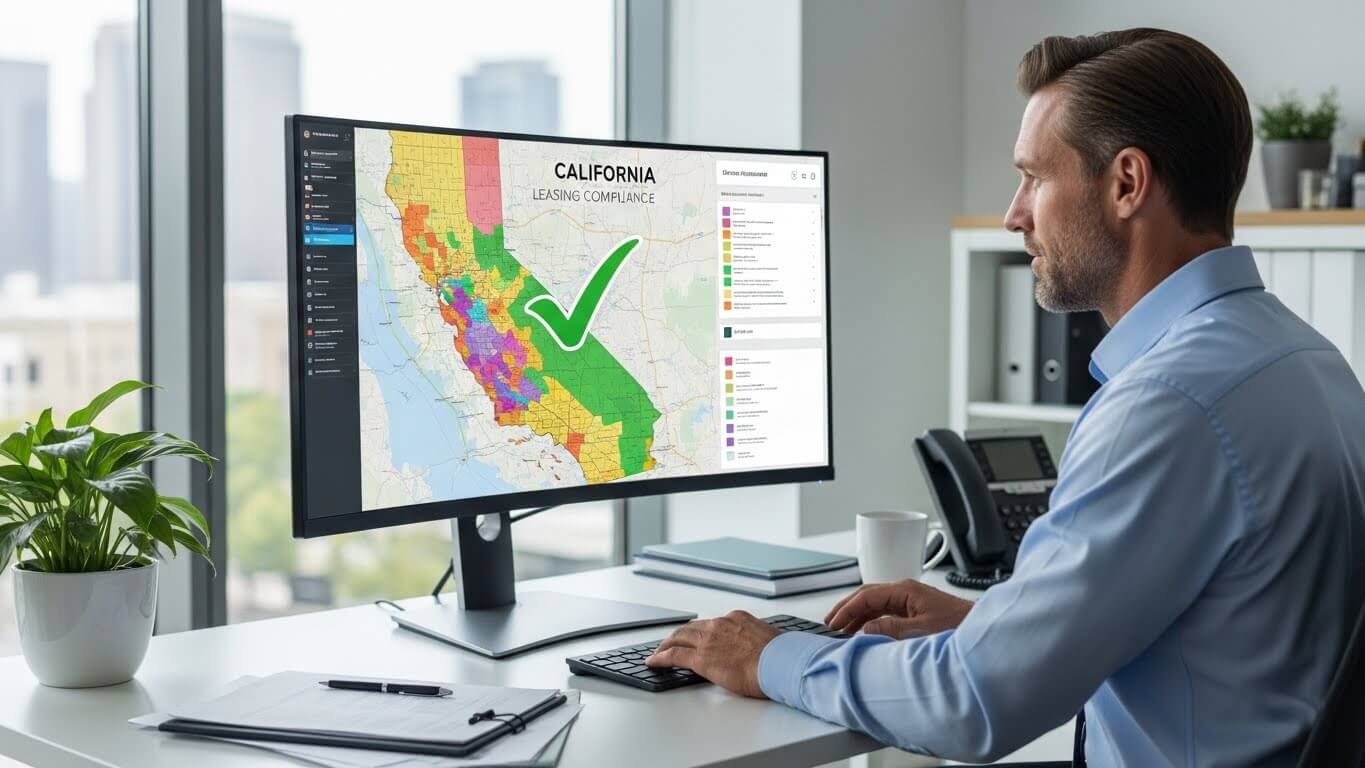
What to ask: How are your delinquency timelines and documents kept current with state regulations? Who reviews your compliance workflows? When California SB 709 or a rent control ordinance changes, how quickly is it reflected in the system and how are operators notified?
7. Support and Implementation: Who Is Actually On Your Side?
Software capabilities are only valuable if operators can use them effectively. Support structure — response time, knowledge depth, implementation quality, and ongoing education — is a differentiator that doesn't show up on feature comparison grids but shows up consistently in operator experience.
The questions here are practical: Is support US-based or offshore? Is it a ticketing system or a named Customer Success Manager who knows your operation? Is implementation a one-time handoff or an ongoing relationship? Does the vendor provide operator education resources that help your team actually use the platform's capabilities, not just access them?
Operators scaling portfolios — adding facilities, onboarding new managers, integrating new vendors — need a support relationship that scales with them. The cheapest platform is rarely the cheapest platform once you factor in the operational drag from delayed support responses, undertrained staff, and implementations that never quite got finished.
What to ask: What does the implementation process look like, and who owns it from the vendor side? Once I'm live, how does support work? Is there an online training resource for new staff
The Feature Grid Problem
Most PMS comparisons end up as feature grids: columns for each vendor, rows for capabilities, checkmarks down the list. The problem with this format is that it flattens qualitative differences into binary ones. "Automation" gets a checkmark whether the system sends a payment reminder email or runs a complete delinquency workflow without human intervention. "Integrations" gets a checkmark whether the platform has five pre-built connectors or an open API with a developer portal.
When you're evaluating platforms, ask for demos of the specific workflows that matter most to your operation, not presentations of the feature list. Ask to see the delinquency workflow run end-to-end. Ask to see a checkout experience from the tenant's perspective. Ask to see how rate changes are triggered and what they look like on the website. The gap between a feature on a slide and a feature in production is where most operator regrets live.
What to Prioritize Based on Your Operation
Not every capability matters equally for every operator. Here's how to weight the criteria based on your situation:
Single facility, owner-operator: Prioritize automation depth and ease of use. You are the staff. The system needs to run reliably without your constant attention. Lease execution quality and delinquency automation are your highest-leverage capabilities.
Growing portfolio (2–10 facilities): Prioritize multi-store management, data ownership, and integration openness. You're adding complexity faster than you can add staff. The system needs to consolidate visibility, not multiply logins.
Established multi-site operator (10+ facilities): Prioritize compliance architecture, revenue management sophistication, and analytics depth. Marginal efficiency gains at scale are significant. The platform that moves average rent per square foot by $0.50 across 5,000 units is worth more than one that's slightly easier to use.
Operators in regulated markets (California, other rent control jurisdictions): Prioritize compliance architecture above almost everything else. The downside of a compliance failure outweighs the upside of most feature advantages.

The Questions That Separate Vendors
Before any demo or sales conversation, these are the questions worth having answered:
- Show me end-to-end what happens when a tenant signs a lease on your platform — from landing on the unit page to gate access.
- Walk me through what happens automatically when a tenant goes delinquent in a California facility.
- How does your platform handle rate management — what triggers a rate change, and how does it reflect on the website?
- Where does my data live, and can I export it in full at any time, at no cost?
- Who maintains your compliance workflows, and how quickly do they update when state regulations change?
- What does your API documentation look like, and which third-party vendors are currently integrated?
- What does implementation look like, and who at your company owns it?
- Once I'm live, what does ongoing support look like?
A vendor who answers these questions clearly and specifically, without pivoting to a feature presentation, is a vendor who knows their product. That's a signal worth paying attention to.
The Bottom Line
Self-storage property management software is infrastructure. Choosing the wrong platform isn't just an inconvenience — it's a constraint on every operational and revenue decision you make until you change it. The cost of switching platforms is real, which makes the cost of choosing poorly significant.
The operators outperforming the market in 2026 aren't doing it with more staff or larger marketing budgets. They're doing it with systems that convert inquiry to signed lease without friction, manage rates and delinquency without manual intervention, and surface the data needed to make good decisions without requiring a spreadsheet to find it.
That's not artificial intelligence. That's a platform that actually works.
Tenant Inc. builds Hummingbird, the cloud-based property management platform built by self-storage operators, for self-storage operators. Hummingbird includes SuperLease™ — the first AI-enabled lease engine for self storage — along with complete automation for billing, delinquency, rate management, and reporting. It connects to 40+ third-party vendors through Nectar, Tenant Inc.'s open API platform, with full data ownership and US-based Customer Success Managers.

.png?width=352&name=What%20Is%20Self-Storage%20Revenue%20Management%20(And%20Why%20Static%20Rates%20Are%20Costing%20You).png)