
.png)
Online traffic is expensive. SEO takes months. PPC burns budget. Every visitor who lands on your facility page and doesn't rent is a cost you've already paid without a return.
Most operators respond to low online conversion by investing more in acquisition — more spend, more campaigns, better rankings. The assumption is that the problem is at the top of the funnel.
Very often, it isn't.
The problem is in the checkout flow. A renter who has found your facility, selected a unit, and started the rental process has already made the hard decision. What's left is execution — and in most self-storage rental flows, the execution is full of friction that turns high-intent traffic into abandoned rentals.
SuperLease™ is Tenant Inc.'s answer to that problem. Its conversion methodology — specifically how the checkout flow is sequenced, how the lease is executed, and how compliance is handled — is designed to capture the rentals that friction-filled flows give away. Operators deploying SuperLease see online conversions increase by more than 30%.
That is not a traffic improvement. It is a conversion improvement.
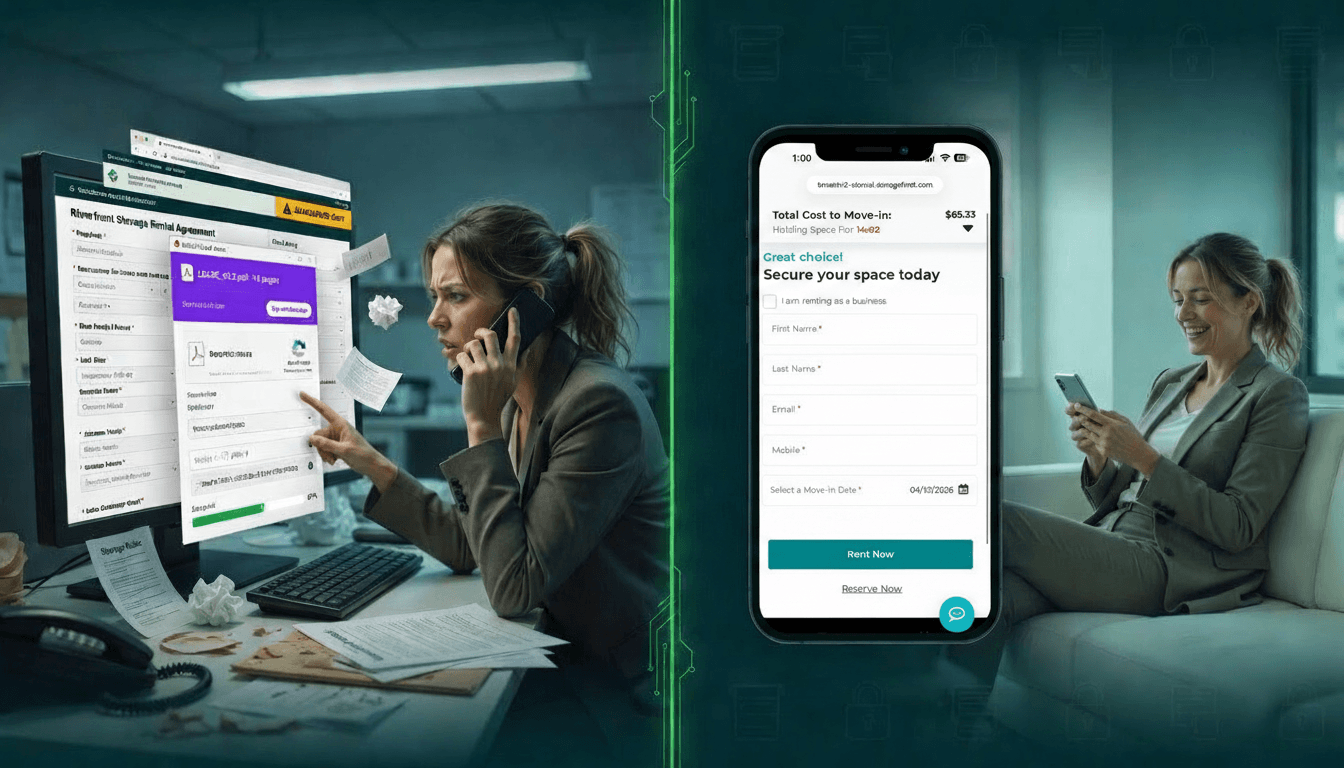
Where Self-Storage Rental Flows Lose Rentals
To understand what SuperLease's methodology changes, it helps to understand where traditional rental flows break down.
The lease presented as a final hurdle. In most self-storage rental flows, the lease appears at the end — after unit selection, after pricing, after the prospect has spent time and intent getting to the finish line. At that point, it doesn't feel like the last step. It feels like a new task. The renter who was ready to commit thirty seconds ago is now being asked to stop, read a document, and complete a signing workflow. A meaningful percentage don't.
E-sign workflows that break the session. When the lease is sent via email for signature outside the rental flow, the renter has to leave the session, open their email, open the document, sign it, and return. On mobile — where a growing share of self-storage rentals originate — this sequence rarely completes. Each step away from the original session is a drop-off point.
Compliance and statutory steps that create mid-flow friction. ID verification, secondary contact capture, and state-specific disclosures are legally required — but in most rental flows, they sit in the middle of the process as manual steps the renter has to navigate on their own. The renter who was moving toward a signed lease hits an ID verification requirement, a form they didn't expect to fill out, or a disclosure they have to scroll through and acknowledge. Some of them stop there. Not because they don't want to comply — because the friction of the step broke their momentum at a critical moment.
Each of these friction points is a place where a renter who had already chosen your facility walks away. None of them are about pricing. None of them are about availability. They are design problems — and they are solvable.
The SuperLease™ Conversion Methodology
SuperLease is built around a single principle: capture commitment at the moment of highest intent, and remove every step that doesn't have to happen before that moment.
In practice, that means restructuring the rental flow around three specific changes.
Capture Payment and Execute the Lease at Peak Intent
SuperLease is built around a simple but powerful principle: secure the rental at the moment the renter has decided, before anything else gets in the way.
When a renter selects a unit, sets a move-in date, and adds protection, they enter their payment details and execute the lease in the same moment — while their intent is highest and their decision is freshest. The rental is captured. The agreement is signed. The commitment is established.
Everything that traditionally threatens conversion — the compliance steps, the statutory requirements, the ID verification, the secondary contact capture — happens after the rental is secured, not before it. The renter has already committed. The lease is already signed. What comes next is access verification, not a gate the renter has to pass through to become a tenant.
This is the structural change that drives the conversion improvement. The friction doesn't disappear — it moves. And where it moves matters enormously. Friction before commitment causes abandonment. Friction after commitment is just process.
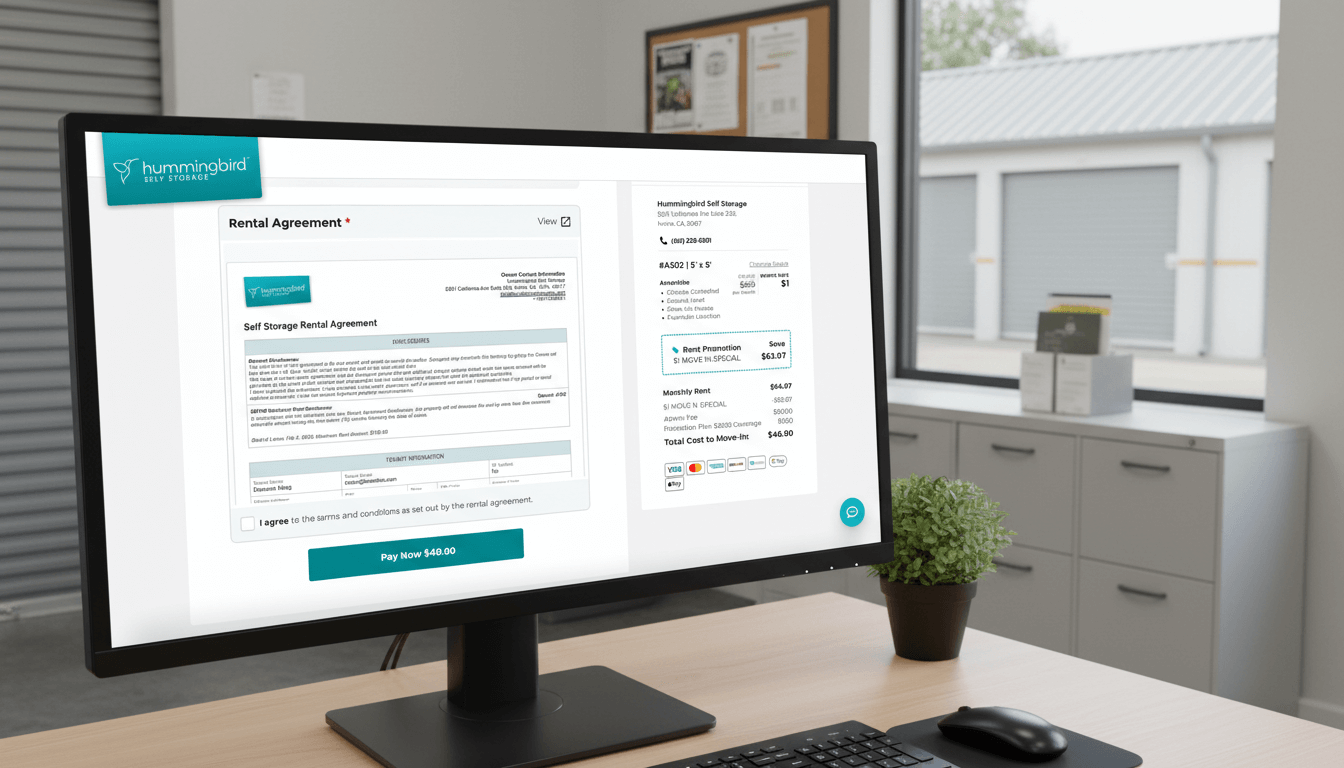
Enforce Compliance After the Rental Is Secured
Because SuperLease captures payment and executes the lease at peak intent, compliance and statutory requirements — ID verification, secondary contact capture, state-specific disclosures — happen after the rental is already locked in.
This is the critical difference. In a traditional rental flow, compliance steps sit between the renter and the signed lease. They create friction at the exact moment commitment is most fragile. In the SuperLease flow, those same steps happen after the rental is secured. The renter is already a tenant. What remains is access verification, not a conversion hurdle.
The compliance doesn't disappear. It just moves to where it can't cost a rental.
And when regulatory requirements change — when California SB 709 introduced new disclosure obligations, for example — operators running SuperLease didn't manually audit and reformat lease templates across their portfolio. The system surfaced the required disclosures automatically, formatted correctly, on the first page of every agreement. Compliance is maintained by the platform, not by the people using it.
The Rental Doesn't End at Move-In. Neither Does SuperLease.
SuperLease's conversion methodology doesn't end at the signed lease. It extends into the tenant relationship.
A lease signed at move-in reflects the relationship on move-in day. As the tenancy evolves — autopay enrollment, protection coverage, address updates — a static document immediately starts drifting from reality. SuperLease updates automatically when the tenant relationship changes. No re-signing. No new templates. The record is always current.
This matters for conversion in a less obvious but equally important way: the move-in experience shapes the tenant's first impression of the facility. A tenant who moved in through a frictionless, professional digital experience — one that felt like modern e-commerce rather than paperwork — starts the tenancy differently than one who fought through a clunky rental process. That first impression compounds into the ongoing relationship, and the ongoing relationship compounds into retention.

The Math on 30%
A 30%+ increase in online conversions is a significant claim. Here's what it looks like applied to a real facility.
A facility with 400 monthly website visitors and a 6% online conversion rate produces 24 rentals per month. At an average monthly rate of $140 and an average length of stay of 18 months, each converted tenant is worth approximately $2,520 in lifetime revenue.
A 30% improvement in conversion produces roughly 7 additional rentals per month from the same traffic. At $2,520 per tenant, that's $17,640 in additional lifetime revenue generated every month — without spending a dollar more on acquisition.
The operators seeing this improvement aren't getting more traffic. They're capturing more of what they already have. And because the improvement comes from rental flow methodology rather than ongoing spend, the return compounds over time without compounding the cost.
Actual Intelligence in the Rental Flow
The self-storage software market is full of AI-powered online rental claims. Most of them describe a digital signature attached to a static document.
SuperLease earns the label differently. The intelligence is in the methodology — the sequencing, the execution, the compliance enforcement, and the living record that maintains itself. None of it requires the operator to be in the loop. None of it requires manual intervention to function.
Artificial Intelligence is the hype. Actual Intelligence is a rental flow that captures 30% more rentals from the same traffic — because it's built around how tenants actually make decisions, not around how software vendors prefer to structure their demos.
%202.png?width=352&name=Streamlining%20Tenant%20Communication%20with%20Automation%20(3)%202.png)

.png?width=352&name=TI-SuperLease%20with%20Clickwrap%20Featured%20Img%20(1).png)