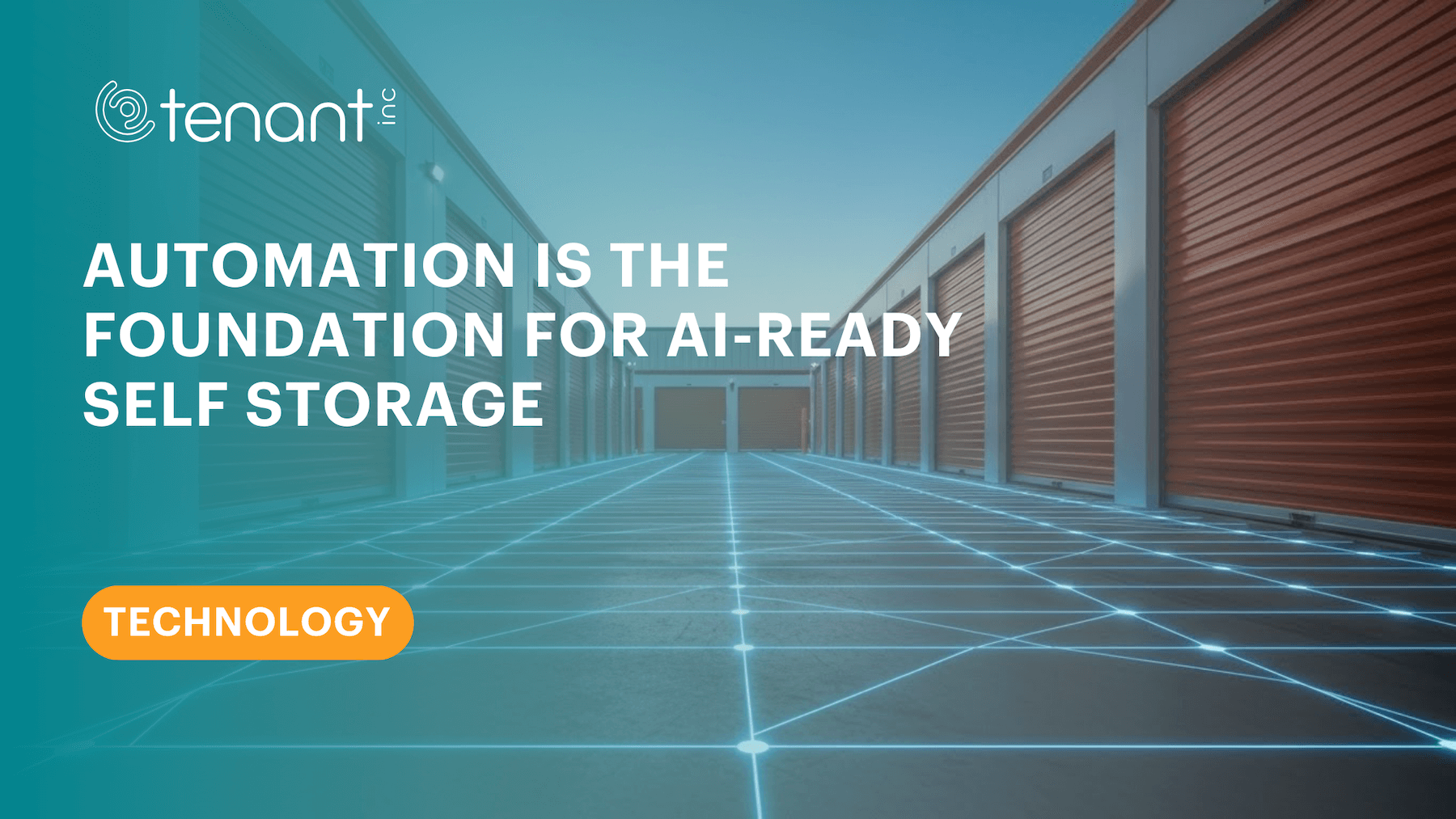
Artificial intelligence is no longer a future concept in self storage. Pricing recommendations, automated leasing interactions, lead routing, and demand forecasting are already being influenced by AI-driven systems. As these capabilities mature, operators are increasingly being asked whether they are “AI-ready” for what comes next.
The more important question is whether their operations are ready.
AI does not replace operational discipline. It amplifies it. When introduced into well-structured environments, AI accelerates efficiency and insight. When layered onto inconsistent or manual operations, it magnifies risk. In 2026, the difference between successful AI adoption and operational exposure will come down to one foundational capability: automation.
AI Requires Consistency, Not Just Data
AI systems function by identifying patterns in structured data. That data must be reliable, consistent, and complete. In many self storage operations, however, core workflows vary by site, by manager, or by legacy habit. Pricing rules may be defined centrally but executed inconsistently. Lease documents may be standardized in theory but manually edited in practice. Tenant communications may be spread across multiple tools without a complete audit trail.
In those conditions, AI does not make smarter decisions. It makes faster decisions based on fragmented inputs.
Automation solves this problem by enforcing consistency at the workflow level. When systems apply the same logic every time, regardless of who is operating them, data becomes dependable. Only then can AI operate with confidence.
The Risk of Skipping the Automation Layer
As AI adoption accelerates, many operators feel pressure to move quickly. New tools promise faster leasing, better pricing, and improved customer engagement. The risk is deploying those tools into environments that were never designed to support them.
Without automation, AI introduces several forms of exposure:
- Pricing recommendations may be generated correctly but executed incorrectly due to manual overrides or delays.
- Tenant-facing AI tools may communicate without full context around disclosures or prior interactions.
- Compliance risk increases as automated scale collides with inconsistent execution.
Automation provides the guardrails that prevent these outcomes. It defines how decisions are applied, not just how they are generated.
Where Automation Actually Enables AI
AI readiness is not achieved by adding a single tool or feature. It is achieved by removing variability from high-volume processes. In self storage, several operational areas are especially critical.
Leasing execution: Automated leasing workflows ensure that pricing, terms, and disclosures are applied consistently across every move-in. This reduces error, improves speed, and creates a reliable legal record.
Pricing enforcement: AI-driven pricing insights only matter if pricing rules are executed consistently. Automated rate logic ensures strategy translates into action without delay or interpretation.
Tenant communication tracking: AI tools interacting with tenants must have access to complete communication history. Automated logging of calls, emails, and messages provides essential context and auditability.
Data integrity and structure: Automation standardizes how data is captured and stored. This allows AI systems to analyze trends accurately rather than interpolating across gaps or inconsistencies.
In each case, automation creates the environment AI requires to operate responsibly.

Automation Reduces Variability. AI Reduces Friction.
Automation and AI serve different but complementary roles. Automation reduces operational variability by enforcing rules and structure. AI reduces friction by improving speed, prioritization, and decision-making within that structure.
Problems arise when these roles are reversed. AI is not designed to impose structure on chaotic systems. It assumes structure already exists. When that assumption is wrong, outcomes become unpredictable.
This is why many early AI initiatives deliver mixed results. The technology performs as expected. The operational foundation does not.
Preparing for 2026 and Beyond
Becoming AI-ready does not require adopting every emerging capability. It requires discipline in how core operations are executed. Operators should evaluate their systems with a simple question: are our workflows consistent enough for advanced automation to act safely at scale?
If the answer is no, the priority is not AI. It is automation.
This includes standardizing leasing workflows, systematizing pricing execution, centralizing tenant communications, and ensuring data integrity across the portfolio. These investments may not feel innovative, but they are what enable innovation to scale without risk.

The Competitive Implication
AI will increasingly separate operators who can move quickly with confidence from those who hesitate due to operational uncertainty. The advantage will not belong to those who adopt AI first, but to those who adopt it responsibly.
Automation is what makes that possible.
In 2026, AI readiness will be defined less by the sophistication of tools deployed and more by the reliability of the systems underneath them. Operators who invest in automation today are not delaying AI adoption. They are preparing to use it well.
Curious how much time (and money) a modern self-storage management platform can save your team? Schedule a demo today to see the tools in action: