
Imagine buying a high-end smartphone, but the manufacturer tells you that you can only use their map app, their music player, and their messaging service. If you want to download a superior third-party app—one that works better for your specific needs—you’re blocked. You own the phone, but the manufacturer controls the experience.
This is the reality for many self-storage operators in 2026. For years, the dominant software providers have operated as "Walled Gardens"—closed loops where the Property Management System (PMS), the website, the payment processor, and the marketing tools are all bundled together. If you want to use a specialized gate system or a cutting-edge revenue management tool that isn't owned by your software provider, you are often told: "No integration available."
But the tide is turning. 2026 is shaping up to be the year of the Open API (Application Programming Interface). As operators become more sophisticated and data-driven, they are rejecting the "one-size-fits-all" bundles in favor of "Open Ecosystems" that allow them to build a custom technology stack.
At Tenant Inc., we founded our platform on a single, non-negotiable principle: Freedom. This article explores why the Open Ecosystem model is superior for modern operators, how it impacts your facility's valuation, and why "integration" is the most important word in your strategic vocabulary this year.
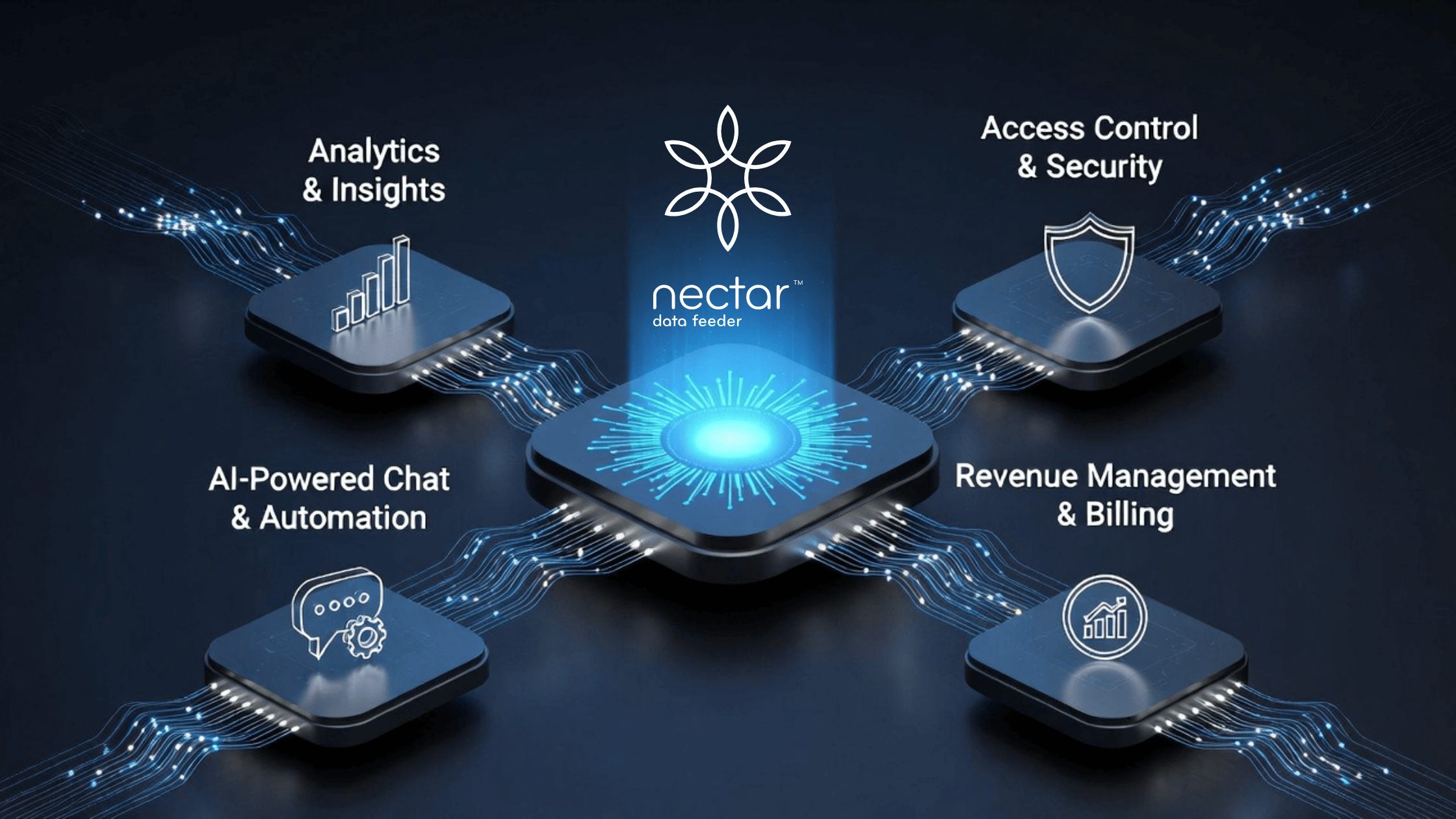
Part 1: Defining the Terms – Walled Garden vs. Open Ecosystem
To understand the strategic importance of this shift, we need to clarify the architecture.
The Walled Garden (Closed System)
In a closed system, the software provider attempts to be everything to everyone. They offer the PMS, the website, the insurance, and the merchant services.
The Pitch: "It's all one login! Everything works together!"
The Trap: Innovation is limited to the vendor's roadmap. If their website product lags behind on SEO trends (like the shift to Generative Engine Optimization), you can't switch to a better web provider because it won't sync with the PMS. You are held hostage by the lowest common denominator of their suite. Furthermore, your data is often siloed, making it difficult to extract for third-party analysis.
The Open Ecosystem (Tenant Inc. Approach)
An Open Ecosystem uses an Open API—a set of publicly available protocols that allows different software programs to talk to each other.
The Reality: Tenant Inc. provides the core operating system (Hummingbird), but we explicitly invite other developers and vendors to connect to it.
The Benefit: You can use Hummingbird for management and Mariposa for your website, but if you want to use a tool for automated auctions (like StorageTreasures) or a specific AI-driven call center, the API allows those tools to read and write data to your PMS seamlessly.

Part 2: Why "Best-in-Class" Beats "All-in-One"
The self-storage industry has become too complex for any single company to be the best at everything. The pace of innovation in specific verticals—security, marketing, analytics—is simply too fast for a generalist PMS provider to keep up.
1. Security and Access Control
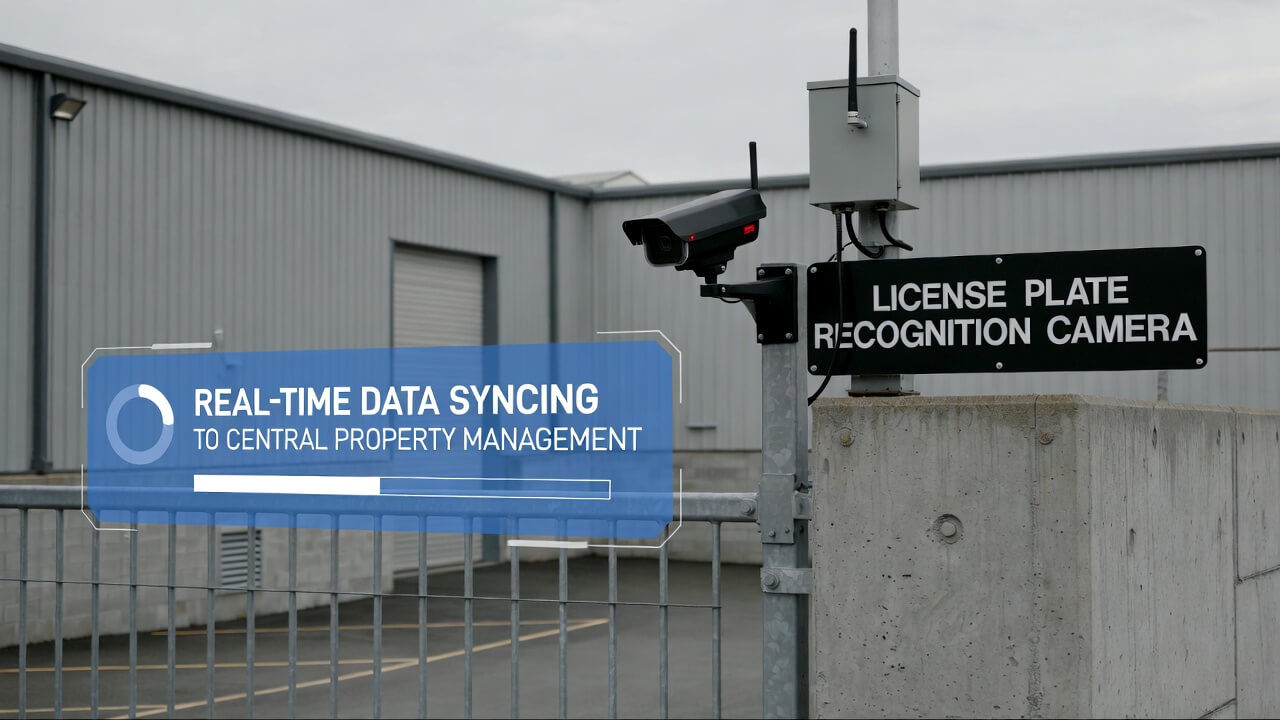
Security technology is evolving rapidly. We are moving from simple keypad codes to Bluetooth locks (Nokē, DaVinci), license plate recognition (LPR), and facial recognition. A dedicated security company will always innovate faster than a generalist software company. An Open API lets you plug the latest security tech directly into your PMS.
Real-World Example: If you use an LPR system, you want it to trigger a "Welcome" text message via your PMS the moment a tenant drives up. This requires a real-time webhook—a feature standard in Open APIs but often missing in legacy closed systems.
2. Marketing & SEO: The Speed of Change
Search algorithms change weekly. With the rise of AI search, marketing agencies need access to your real-time unit availability data to run "Real-Time Inventory" ads (schema markup). In a closed system, your marketing agency might have to manually update ads or wait for a nightly batch sync. In an Open Ecosystem, the API feeds real-time inventory to the ad platform automatically, ensuring you never pay for clicks on a unit you don't have.
3. Revenue Management: Your Secret Sauce
While Hummingbird has a robust Rate Management Center, some institutional operators have proprietary pricing algorithms built in Python or R. They don't want to use the vendor's algorithm; they want to use their own. Our Open API allows these operators to feed their custom pricing strategies directly into the system, bypassing standard logic. This capability is essential for REITs and large privates who view their pricing logic as intellectual property.
The Case of the "Neighbor" Integration
A prime example of the Open Ecosystem in action is Tenant Inc.’s recent integration with Neighbor, the peer-to-peer storage marketplace. Because our architecture is open, we were able to build a bridge where Tenant Inc. users can automatically list vacancies on Neighbor’s marketplace. This opens up a massive new demand channel (millions of users) that closed systems might block or delay to protect their own internal marketing networks.
Part 3: Data Sovereignty and Asset Value
Data is the oil of the 21st century, and in self-storage, it is the primary driver of asset value. When you go to sell your facility or refinance, the clarity, accuracy, and portability of your data are scrutinized by buyers and lenders.
Data Ownership: In some closed agreements, the vendor claims rights to your tenant data or makes it difficult to export in granular formats. In an Open Ecosystem, the data belongs to you. You can pipe it into a data warehouse (like Tenant Data Warehouse) or business intelligence tools (like PowerBI or Tableau) to run your own queries.
GAAP Compliance: Institutional investors require Generally Accepted Accounting Principles (GAAP) reporting. Many legacy systems run on cash-basis accounting. Hummingbird was built with an Open API that supports true accrual accounting integrations, making your reports "audit-ready" for REITs or private equity buyers.
Future-Proofing: We don't know what technology will exist in 2030. Maybe we will have drone delivery to storage units. Maybe AI will handle 100% of rentals. An Open API ensures that whatever new technology emerges, your PMS will be able to connect to it. A closed system bets your future on the hope that they will build it.
Part 4: The Developer’s Perspective (Technical Insight)
For the CTOs and IT directors reading this: Tenant Inc.’s API isn't just a marketing term; it’s a robust, documented set of endpoints using modern standards (JSON/REST).
Unlike legacy systems that might offer a clunky "file exchange" (CSV dumps via FTP) and call it an integration, a true Open API allows for bi-directional sync.
-
Read Capabilities: A kiosk or mobile app can query the PMS to ask, "Is Unit 101 available?" and receive a response in milliseconds.
-
Write Capabilities: The kiosk can tell the PMS, "John Doe just rented Unit 101, here is his credit card token," and the PMS updates the ledger instantly.
-
Webhooks: The PMS can push a notification: "Payment failed," triggering an automated SMS via a third-party messaging app.
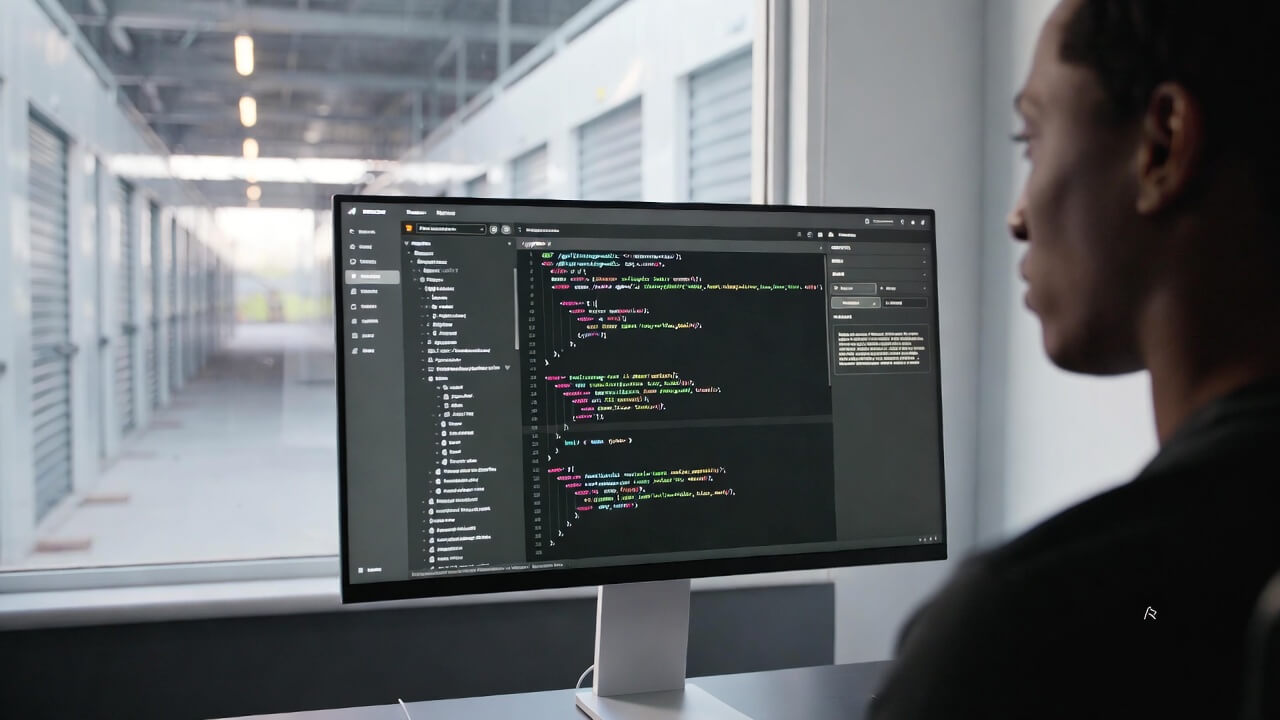
This level of connectivity allows for the creation of "headless" experiences. You could, theoretically, build your own custom rental app from scratch and just use Hummingbird as the backend database. That is the ultimate flexibility.
The Acceleration Layer: Open Architecture That Builds Faster
An API is only as powerful as its usability.
Many legacy platforms claim to offer integrations but provide limited documentation, static file exchanges, or heavily restricted endpoints. That forces developers into long build cycles, brittle connections, and ongoing maintenance overhead.
Tenant Inc.’s architecture was built differently.
Our Nectar API is fully documented and structured for real-world development. That documentation is now optimized for modern AI coding assistants, allowing internal development teams and agencies to scaffold custom integrations in hours, not weeks.
This changes the integration equation.
-
Deeper Integrations: Developers can access multiple data layers through structured endpoints, enabling bi-directional workflows that go beyond surface-level data pulls.
-
Faster Development Cycles: AI-assisted coding compresses integration timelines, reduces engineering cost, and accelerates proof-of-concept builds.
-
Compounding Innovation: As AI development tools evolve, the ability to extend and customize the platform evolves with them. The architecture improves in leverage over time instead of becoming constrained.
In a closed system, you wait for roadmap releases.
In a true open ecosystem, you build.
In a well-documented, AI-readable ecosystem, you build fast.

Conclusion: Freedom is Profitable
In 2026, the self-storage industry is no longer about just renting 10x10 boxes. It is about logistics, digital experience, and financial optimization. The "Walled Garden" model of the 2010s served its purpose, simplifying the digital transition for many. But today, it is a constraint.
The Open Ecosystem is the architecture of growth. It empowers you to be agile, to experiment with new technologies, and to own your destiny. Whether it is integrating a new AI leasing agent, complying with complex laws like SB 709 via SuperLease, or simply wanting the freedom to choose your own payment processor—the Open API is the key.
Don't let your software vendor decide your business strategy. Choose an ecosystem that lets you build it.

%20(1).png?width=352&name=What%20Software%20Marketers%20Have%20in%20Common%20with%20High-Performing%20Storage%20Operators%20(1)%20(1).png)
%20(1).png?width=352&name=Tenant%20Inc.%20x%20Go%20Local%20Integration%20Hero%20Image%20(3)%20(1).png)